Wednesday, October 21, 2009

Gunkanjima, Nagasaki

I went on a day trip to Nagasaki in early August, but with a specific purpose in mind - to visit the island of Gunkanjima. Here are some figures about the island from Wikipedia's page on Gunkanjima:

Hashima Island (端島; "Border Island"), commonly called Gunkanjima (軍艦島; "Battleship Island") is one among 505 uninhabited islands in the Nagasaki Prefecture about 15 kilometers from Nagasaki itself. The island was populated from 1887 to 1974 as a coal mining facility.

In 1959, its population density was 835 people per hectare (83,500 people/km2) for the whole island, or 1,391 per hectare (139,100 people/km2) for the residential district, the highest population density ever recorded worldwide.


It may not have been the most pleasant place to live due to its cramped nature and relative isolation, but it had all the conveniences of any other town (with perhaps the exception of a large park): a cinema, swimming pool, shops, a shrine, so forth. There also existed a school for the children living on the island. Unfortunately it also had a darker element to its existence, as the population also included forced labourers from Korea and China during World War Two.

Since 1974 it has remained abandoned apart from a number of daring urban explorers (of whom I am admittedly quite envious) until recently, when a Nagasaki ferry company began landing tours of the island. Here are a couple of my photos from the trip, click for an enlargement:


Unfortunately, being herded around with a large group of other tourists somewhat ruins the purpose of visiting an abandoned site, but it's currently the only legal option for visiting. It was also extremely hot that day, especially standing on concrete, and the sea walls were sufficiently high enough to stop any sea breeze. But otherwise it was an unusual and interesting experience, and to me it's one of the more fascinating places in Japan of which little is known to most locals.

Anyway, having said all that, I'd certainly be keen to visit Nagasaki again so I can take the time to do some sightseeing around the city itself, something I actually didn't do!

Monday, October 12, 2009

Various topics

Unfortunately I didn't get around to writing anything last week - this week I should get around to it before I completely forget what was discussed last Friday!

In the week prior, the topic of compulsory English language education was briefly raised. I completely support the idea of exposing students to foreign language learning, at least at an elementary or junior high school level, as I support any sort of activity that requires people to use their brains in different ways. (As expected, the part of my brain that deals with language gets a regular workout, although the part that is used for arithmetic has, in all likelihood, completely atrophied.) One of my concerns is that, at least until high school, students are rarely given the choice of what language they would like to learn. Fortunately, in my first year of junior high school I was required to attend classes for French, German and Indonesian (sequentially, not all at the same time) and was then asked to choose one to study for the following year - not such a bad system.

Whilst people undertake language study for a variety of reasons, I strongly believe the process of language learning should be an enjoyable one. If people come to associate language (such as English) with failure, embarrassment and discomfort, then it's understandable they will be hesitant to use it (such as the woman who ran away from Kie) or perhaps even hold a resentment towards it. Hence another reason why believe students should be able to choose a language they find appealing.

Unfortunately, the nature of Japanese society, language and behaviour may also be something of a barrier to effective foreign language learning. Progression in language learning requires you to argue your opinion, to make mistakes, to speak in front of a number of people, and to face negative evaluation - a gross generalisation as it may be, I feel that a large number of Japanese people would choose to stay silent instead of subjecting themselves to these things. The fairly limited syllabary of the Japanese language is also something of a hindrance that (initially) can't be helped, but for example, having such things as katakana furigana for non-Japanese songs at karaoke isn't doing anything to encourage the correct pronunciation of foreign words. Gairaigo (and various portmanteaus/contractions) provides a good base of vocabulary for those learning English in particular, but again, may end up causing confusion.

Anyway, I've rambled on long enough about the topic of language learning in Japan, and the last thing I want to do is discourage Japanese people or anyone else from learning a foreign language. I have a lot of respect for anyone attempting to do so, whether it be related to their career, their hobby, or whatever.

Last Friday my group decided that homosexuality and personal questions were two particular topics of interest for discussion, something I'm looking forward to hearing about. Eventually I'd also like to get around to writing a little bit about food in Japan, but in particular, vegetarianism in Japan.

Cheers!

Tuesday, September 29, 2009

Summer holidays

It's definitely been a while since I've written in the blog! Hello to everyone from last semester and welcome to all those who arrived this semester. During the summer I spent about a month travelling around Japan, and whilst it cost a lot of money I had a good time. Two weeks were spent catching up with friends and seeing some countryside I hadn't seen before, and the following two weeks were spent with my girlfriend. After about 5 months of being apart I was very happy to see her again, as you'd expect. :) As it was her first time in Japan we visited a lot of well-known spots, especially in the Kansai region. Throughout my month-long holiday I was able to see quite a lot of places - Matsuyama, Tokushima, Kobe, Himeji, Kinosaki, Amanohashidate, Hikone, Kyoto, Nara, Mt Koya, Osaka, Hiroshima, Miyajima, and I even passed through the small but well-known town of Obama in Fukui-ken. ;) Here are a handful of photos from the summer:


This first photo isn't so interesting in itself, but it was taken inside a Kyoto townhouse, in which my girlfriend and I stayed for two nights. It's run by Iori, an organisation co-founded by author Alex Kerr which aims to preserve Kyoto machiya and give travellers a brief but wonderful experience of staying inside one. It's far more spacious than a hotel and with much more privacy than a ryokan... unfortunately you have to pay a bit more for these privileges!


This is Kinosaki in northern Hyogo-ken, a beautiful little onsen town where everyone spends the evening walking around in yukata and geta between various hot springs baths in the town. Even the train ride from Himeji through the countryside was fantastic. The baths themselves in Kinosaki aren't too bad, but the water quality in Kumamoto is much better. ;)


One of the vine bridges deep in the Tokushima-ken countryside. The car ride through the mountains is nauseating, but well worth it.


Oku-no-in cemetery at Mt Koya is easily one of the most stunning places I've visited anywhere in the world, unfortunately photos don't do it justice. There's a remarkable amount of history within the cemetery and is apparently quite a surreal and eerie place to visit during the cold and misty times of the year.


I absolutely love whisky, and Japanese whisky has (quite deservedly) been receiving a lot of attention in recent years. I had a brilliant day out at the Suntory Yamazaki distillery between Osaka and Kyoto. Not only are Yamazaki tastings free during the tour, but the whisky bar is unbelievably cheap... so the day descended into a bit of a summery golden haze. This above photo was taken in the "whisky library".


Me fooling around in Nara.


The Awa Odori festival in Tokushima every August 12 - 16 is brilliant, and absolutely enormous. I attended the festival in 2005 and since then had been looking forward to experiencing it again. There's something unique about the atmosphere and energy of that festival I haven't felt anywhere else in Japan, or in the world, for that matter.


My girlfriend Holly and I, on the boat to Miyajima. :)

See you guys next Friday!

Friday, July 3, 2009

Second assignment - Minamata disease

I hope this fits the criteria of the assignment!

Anyway, the source material I'm referring to is an article from the Asian Economic News website, published August 27 2001: "China to learn about Minamata mercury poisoning".

As a result of China's rapid industrialisation and economic growth, they too are repeating what has happened in numerous other regions which have gone through such a rapid change, namely, allowing environmental issues to take a backseat to development. Subsequently, many parts of China are having to deal with mercury and other pollutants being released into the environment at a dangerous rate.

In light of this, the city of Minamata and the Chinese city of Zhangjiagang, "designated as the first environment model city by the Chinese government", promoted an exchange in an attempt to share information on environmental issues, and according to the article, the city of Minamata intends to further this plan in an attempt to help other countries deal with similar poisonings.

Unfortunately I haven't looked much further into the issue to see what resulted of this, or whether these exchanges have spread further across the world, but if there were few good things to come of the Minamata poisoning then this would certainly be one of them. "The mercury poisoning occurred at the height of Japan's economic boom. We would like to tell China not to make that mistake," a Minamata official said.

Thursday, June 18, 2009

So bizarre you couldn't make it up

Came across this at The Japan Times website the other day:

'Cute ambassadors' roam globe to promote Japan's pop culture

Three female "ambassadors of cute" appointed by the Foreign Ministry have started traveling abroad to introduce Japanese pop culture to young people overseas.

One of the "kawaii ambassadors," Shizuka Fujioka, the "magician clothing coordinator" known for her school uniform outfits, took part in an event in Thailand in March. The other two will hit Paris in July.

[...]

"I think it will be in Japan's national interest if there is at least one person in the host country who thinks I'm pretty," [Fujioka] said.


(source)

Congratulations on setting your gender back 50 years, Miss Fujioka.

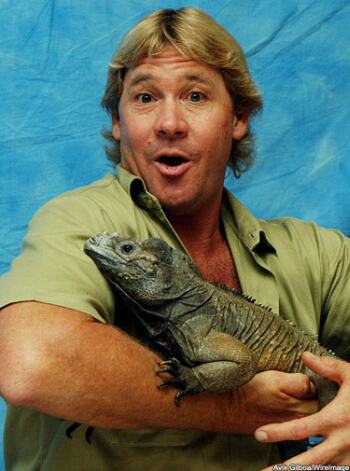
I'm not sure how the wider Japanese population feels about something such as this. There's certainly no denying that Japan pop culture is a source of soft power and a cultural asset, but to me it's still about as cringe-worthy as Crocodile Dundee, Steve Irwin or Ken Done paintings being cultural ambassadors for Australia.

Wednesday, June 10, 2009

「諸君の中に一人でも俺と一緒に立つ奴はいないのか。」

In light of some recent discussion concerning authors and stories, I felt it was apt to bring up a particular topic which I was originally going to mention in my post about Constitution Day and controversial symbolism - Yukio Mishima.

I'm certain that most people in Japan of at least a high school graduate age are aware of Yukio Mishima, even if they aren't familiar with his work. It's difficult to give a nutshell summary of his life, but as briefly as I can, he was a Japanese author born in 1925 who had a childhood spread between being raised by his grandmother who rarely let him venture outside or participate in "boyish" activities, and his militaristic father who held a disdain for any sort of effeminate behaviour. Mishima falsified medical conditions to avoid being drafted to fight in WW2, and against his father's wishes, furthered his passion of writing into and beyond his teen years. He penned numerous novels, plays and short stories, and later in life developed an interest in bodybuilding, ultra-nationalism, and eventually formed his own private militia, the Tatenokai. On November 25, 1975, Mishima and members of the Tatenokai attempted to stage a coup d'etat at a Self Defence Forces base in Tokyo, aiming to reinstate the Emperor as the political power of Japan through an address on a balcony to the soldiers below. Upon its failure, Mishima retreated into the building, committed seppuku, and was beheaded by one of his followers.


First of all, I admit that I haven't even come close to reading a sizeable portion of his work, so extensive (and occasionally impenetrable) is his oeuvre. But whilst his novels tell genuinely captivating tales, I find the story of Mishima himself far more fascinating. The transformation from a timid, frail, and effeminate young man into a brutal, narcissistic nationalist with a fascination for death, combined with his not-so-closeted homosexuality, is rather unique. However, it seems he is often brushed off by many as simply being a "crazy man" or "a bit strange".

To me, Mishima is also one of many pieces in the puzzle of Japan's struggle to assert and identify itself in the postwar period. The bombings of Hiroshima and Nagasaki, comfort women, Nanjing, SCAP Occupation, Yasukuni Shrine, history revisionism, etc., all play into this issue (and is an enormously broad topic about which volumes can and have been written!). Unto this, Mishima seems to have been adopted by numerous right-wing groups in Japan as a sort of inspirational figurehead (have a look at this link) despite his contrasting belief that Emperor Hirohito should have taken responsibility for those who died during the war.

Now, having said all that and having made a huge segue into right-wing groups, one point I'd like to get across is that I can't stand these twits. Not because of their politics or radical ideologies, but mainly because of the noise pollution they create. I'm not quite sure how the police manage to turn a blind eye (or rather, a deaf ear) to such a disturbance, as these groups would undoubtedly have their vehicles and equipment confiscated if they attempted to drive around blaring slogans and music in other countries. On a similar level, the police seem completely uninterested in reining in various bousouzoku bike gangs creating all kinds of noise at 4 o'clock in the morning, but appear quite willing to stop foreigners on their bicycles for no apparent reason...

Right, it's about time I went to bed!

Wednesday, June 3, 2009

Sexy sumo carwash

Not for the purposes of social commentary or serious discussion or anything of the sort... just for a laugh!